NGA’s members are independent community grocers that are privately-owned by families or employees. They are vital to the communities in which they are located, and more than half of our membership is classified as “small” under the Small Business Administration’s definition. Independents differentiate in the marketplace based on the needs of the local community, while showing a strong commitment to civic life and providing their neighbors with quality goods and nourishing foods. The issues that affect their businesses are as diverse as the communities they serve.
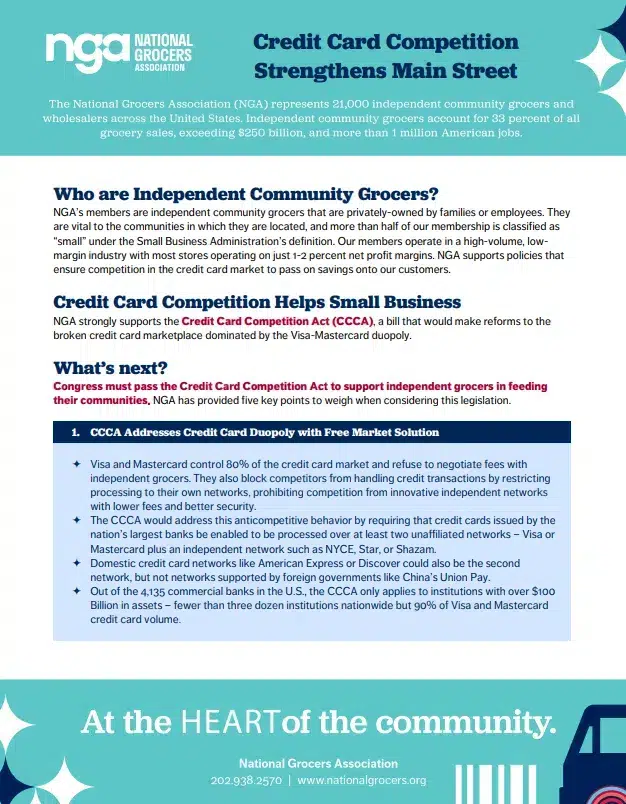
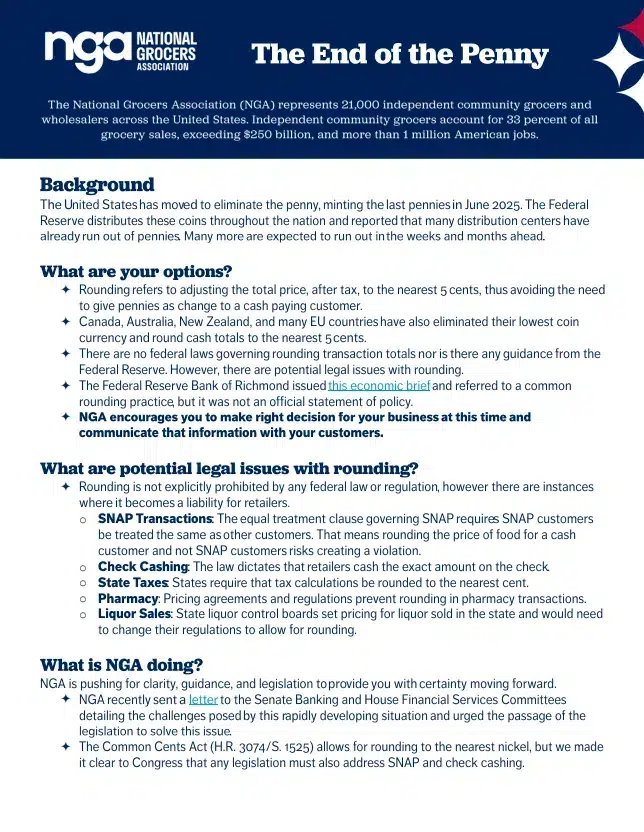
Payments
Swipe Fees Store Toolkit
In-Store Penny Shortage Signage
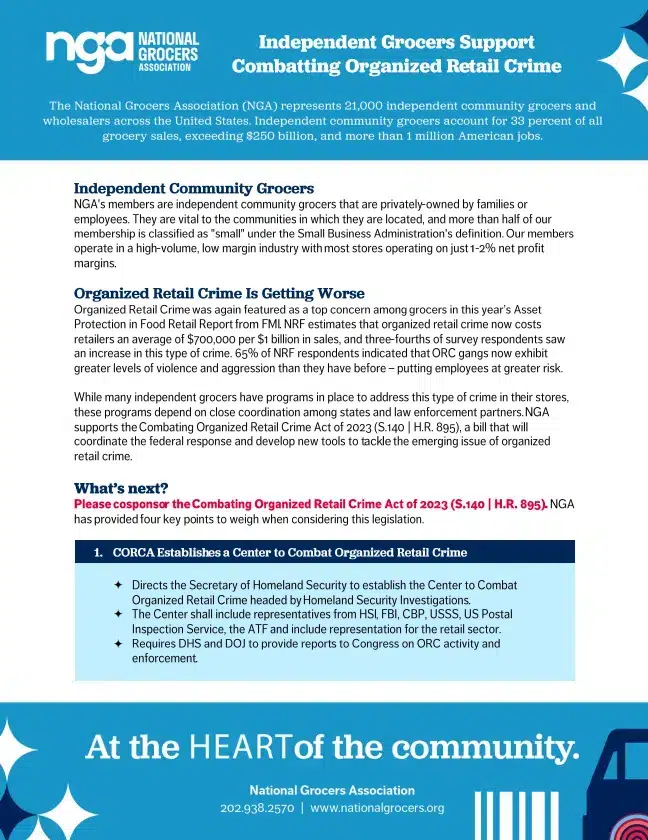
Organized Retail Crime
Organized Retail Crime was again featured as a top concern among grocers in this year’s Asset Protection in Food Retail Report from FMI and is estimated to cost retailers an average of $700,000 per $1 billion in sales. While many independent grocers have programs in place to address crime in their stores, these programs depend on close coordination among states and law enforcement partners.
NGA supports the Combating Organized Retail Crime Act of 2025, a bill that will coordinate the federal response and develop new tools to tackle the emerging issue of organized retail crime.
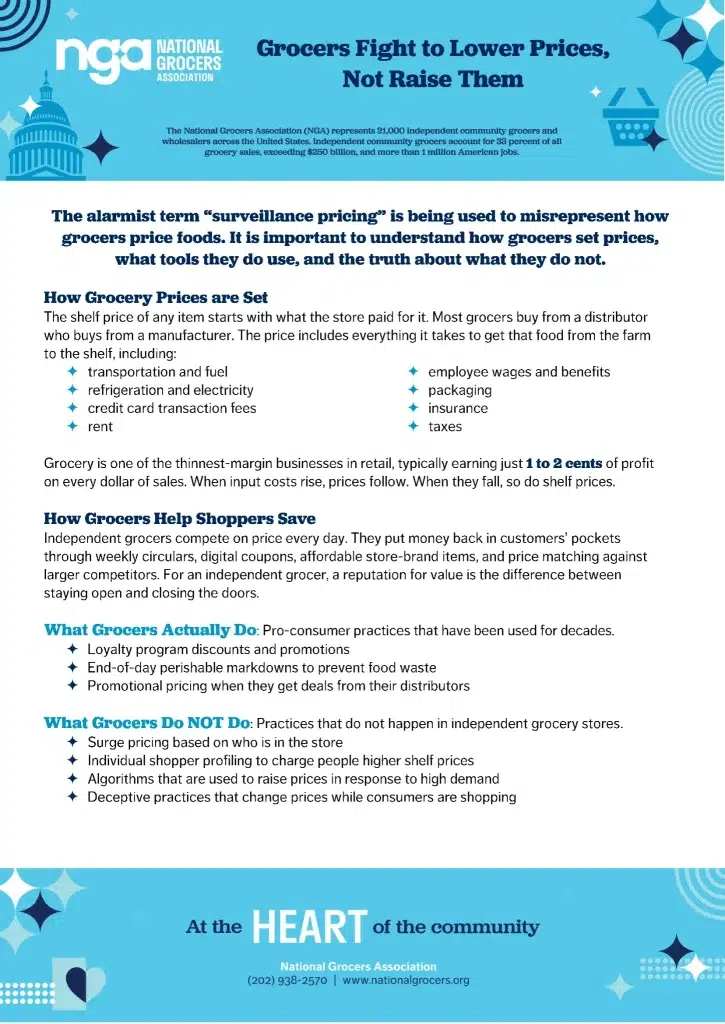
The alarmist term “surveillance pricing” is being used to misrepresent how grocers price foods. It is important to understand how grocers set prices, what tools they do use, and the truth about what they do not.
Taxes
In 2022, retail job openings remained over 1 million per month on average, representing a 28% increase from pre-pandemic levels and a 138% increase over the last decade. The aging baby boomer generation is retiring and there are not enough skilled younger people to replace them. In addition, small businesses do not have enough access to the entire workforce, including immigrants and second chance workers.
NGA has developed three key labor policy asks to support independent grocers.